Taxonomy & naming
The species was described by the German naturalist Wilhelm Peters in 1852 as Chromis mossambicus, from material he collected during his expedition to Portuguese Mozambique — the source of the species epithet, which simply means "of Mozambique." Eschmeyer's Catalog of Fishes and FishBase carry the valid name today as Oreochromis mossambicus (Peters, 1852), the parentheses signalling that Peters originally placed it in a different genus. The genus name Oreochromis blends Greek roots — oreos, "of the mountains," and chromis, an old name for a perch-like fish — and was erected to gather the maternal mouthbrooding tilapias once lumped under Tilapia.
That generic history is the single most important thing to understand about this fish's names, because the hobby and older literature are full of synonyms that are still in circulation. Over its history it has been called Tilapia mossambica and Sarotherodon mossambicus, and the IUCN lists a thicket of junior synonyms including Chromis dumerilii (Steindachner, 1864), Chromis natalensis (Weber, 1897), Chromis vorax (Pfeffer, 1893) and Tilapia arnoldi (Gilchrist & Thompson, 1917). The modern three-genus split of the tilapias — Tilapia (substrate spawners), Sarotherodon (paternal or biparental mouthbrooders) and Oreochromis (maternal mouthbrooders) — was formalized largely through Ethelwynn Trewavas's work in the 1980s, and O. mossambicus is effectively the type-of-idea for the Oreochromis line: a maternal mouthbrooder of standing and brackish lowland waters. In the trade it is the "Mozambique tilapia" or "Mozambique mouthbrooder"; aquarists who have kept it often just call it the "Mossie," and Afrikaans speakers in its native range know it as the bloukurper, the "blue kurper."
Appearance
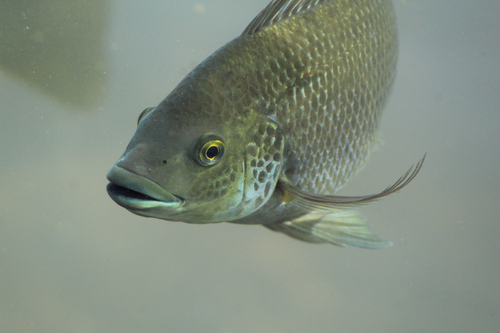
This is a deep-bodied, laterally compressed cichlid built on the standard tilapia plan: a single long dorsal fin (15–18 spines followed by 10–13 soft rays), three anal spines, and a body that is fusiform in profile but flattened side-to-side. FishBase gives a maximum of about 15.4 in (39 cm) standard length and a maximum published weight near 2.5 lb (1.1 kg), with a common length closer to 14 in (35 cm) — a genuinely large fish, and the single fact that catches the most aquarists off guard. Reported maxima vary a little among regional faunas (southern-African guides often cite around 16 in / 40 cm total length), which is the expected spread for a species whose growth is famously plastic: crowded or food-poor fish stunt hard, and stunted individuals can mature at 2.5–3 in (6–7 cm) while well-fed ones run to the full size.
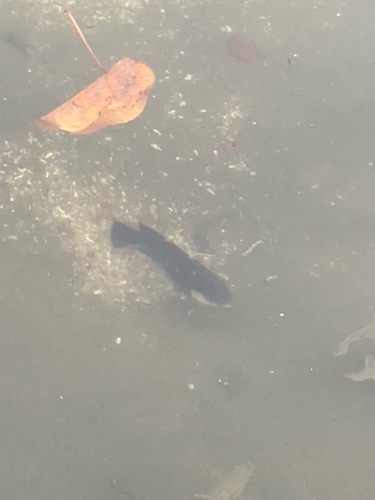
Color is where the "plain" reputation comes from, and it is half-deserved. Females and non-breeding males are a drab silvery-grey, usually marked with two to five dark mid-lateral blotches and a fainter dorsal series. A breeding male is a different animal: he turns largely black, with strikingly white or pale lower parts of the head and red-edged margins to the dorsal and caudal fins. Mature males also develop an enlarged, almost duckbill-like snout and jaws, often making the upper head profile concave — a useful field mark separating big males from the convex-headed juveniles and females, and from look-alike congeners. The wild fish is essentially a dull green-grey; the pink, red and "golden" tilapias seen in shops and on dinner plates are selectively bred color morphs, and some of those ornamental lines are in fact hybrids with other Oreochromis species, which matters both for identification and for the conservation story below.
Range & habitat
The native range is the lowland southeast of Africa: the Lower Zambezi and Lower Shire systems and the coastal plains from the Zambezi delta south to around Algoa Bay in South Africa's Eastern Cape, extending up the Limpopo system and into the eastern interior. The IUCN's range statement names Eswatini, Malawi, Mozambique, South Africa, Zambia and Zimbabwe as the native footprint — which is exactly why the Lake Malawi/Niassa basin appears in its distribution. The honest framing matters here: O. mossambicus is a natural inhabitant of the wider Malawi/Niassa catchment's lower rivers and floodplains, but it is a lowland generalist, not one of the lake's roughly 800–1,000 endemic cichlids, and it is no part of the rock-dwelling mbuna or open-water chambo flock that make the lake famous. Beyond this native zone it has been carried, deliberately and accidentally, to tropical and warm-temperate fresh waters across more than ninety countries, where it is repeatedly logged as invasive.
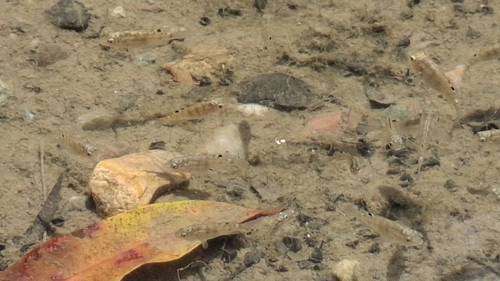
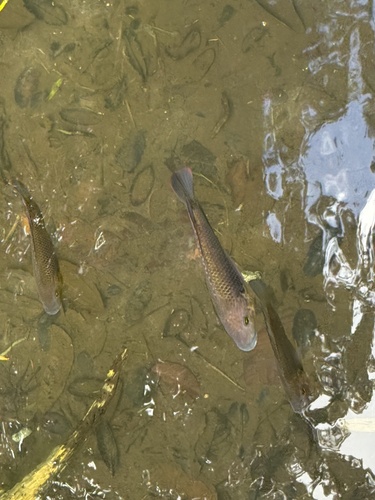
Ecologically it is a fish of slack and salty water rather than clear rocky reef. FishBase records it from roughly 1–40 ft (1–12 m) depth in reservoirs, rivers, creeks, drains, swamps, coastal lakes and estuaries, typically over mud or sand and often among vegetation; it avoids fast-flowing water, permanently open estuaries and high altitudes. Its defining trait is tolerance. It is highly euryhaline — it grows and breeds in fresh, brackish and full-strength seawater, and can be reared in hyper-saline ponds — and southern populations are most common in blind estuaries and coastal lagoons. It withstands low dissolved oxygen, gulping surface water when needed, survives the near-total drying of temporary pools, and spans an extended temperature range of roughly 46–108°F (8–42°C) with a natural band around 63–95°F (17–35°C). That envelope is precisely what makes it both a forgiving farm animal and a formidable colonist.
Ecology & diet
Trophically, O. mossambicus is a low-level omnivore that leans herbivore-detritivore as it matures — FishBase places it at a trophic level of about 2.2. The bulk of the adult diet is algae and phytoplankton (diatoms feature heavily), plus detritus and aquatic plants, taken with fine, numerous gill rakers and very fine pharyngeal teeth suited to processing soft, abundant, low-energy food. But it is an opportunist, not a specialist: it also takes zooplankton, small insects and their larvae, shrimps and worms, juveniles are more carnivorous than adults, and large individuals will prey on small fish and even cannibalize their own young. Seriously Fish's blunt summary — that it behaves like an "aquatic dustbin" that eats virtually anything — captures the ecological reality better than any tidy guild label.
That plasticity is the engine of its success and its trouble. A fish that can graze the bottom of the food web, breed under almost any conditions, tolerate salt and bad water, and stunt rather than starve has very few places it cannot gain a foothold. In its native estuaries and floodplains it is a normal, productive part of the community; dropped into a naive system, the same toolkit lets it outcompete and displace local fishes, which is why FishBase flags it as a "most successful and vagile invader" and notes adverse ecological impacts reported from many of the countries it has reached.
Behavior & breeding
Mozambique tilapia are mainly diurnal and will form loose schools, but the interesting behavior is reproductive. The species is a polygamous maternal mouthbrooder with a lek-style mating system. Where the bottom suits, territorial males gather and each excavates and defends a basin- or saucer-shaped spawning pit in sand or mud; the male darkens to his black breeding dress, produces courtship sounds, and works to entice females to his pit. A female deposits her eggs — clutches commonly run from a hundred to well over a thousand — and the male fertilizes them; the female then takes the eggs and milt into her mouth, where fertilization can even be completed, and carries the developing brood alone.
From there it is pure maternal investment. The female ceases feeding and lives off body reserves, circulating water over the eggs with chewing movements of her jaws; the fry hatch in her mouth in about three to five days depending on temperature, are released after roughly ten to fourteen days, and continue to dart back into her mouth when threatened until they are around three weeks old. Mouthbrooding females often school together, and a female may raise several broods in a season — every few weeks under good conditions. The system also features the cheating strategies typical of leks: subordinate "sneaker" males, sometimes adopting female-like coloration and behavior, slip into a spawning pit to release sperm during the brief spawning window. Outside of breeding the species is fairly unfussy and only moderately aggressive toward other fish; the real aggression is territorial and switches on at spawning.
In the aquarium
The candid hobbyist verdict on O. mossambicus is that it is easy to keep, easy to breed, and — for most people — not worth keeping. It is hardy to the point of being nearly indestructible, indifferent to water chemistry within a broad range (Seriously Fish suggests roughly 70–81°F / 21–27°C, pH about 6.2–8.5, moderate to hard water), and so willing to spawn that the trouble is usually too many fish rather than too few. The catch is size and temperament over time. This is a 15-inch fish that is routinely sold as an inch-long, candy-pink juvenile, and experienced keepers and forum threads tell the same story again and again: the "cute" little cichlid becomes a large, messy, substrate-churning animal that needs a tank measured in feet, not gallons. Seriously Fish puts an adult's realistic footprint at around an 80 in (210 cm) tank near 200 gallons (760 L), and warns that many an unsuspecting buyer ends up "with a monster on their hands" within months.
Kept honestly, that means: a very large tank, a sandy substrate (it digs, and it will uproot or eat live plants), powerful filtration to cope with a heavy waste load, and tankmates that are big enough not to be eaten and robust enough to ignore — large African or Central American cichlids, big plecos and Synodontis catfish are the usual suggestions. It is generally tolerant outside spawning but becomes pit-digging and territorial when breeding, and conspecifics will squabble. The mistakes are predictable: underestimating the adult size, expecting bright color (the wild fish is a drab green-grey; the vivid forms are bred or hybrid lines), and then being unable to rehome the steady stream of fast-growing fry, which dealers rarely want. For all but tilapia specialists, pond keepers, or aquaculture hobbyists, it is a fish to admire in the literature rather than buy on impulse.
Conservation
The conservation picture here is genuinely strange, because O. mossambicus is simultaneously a global pest, a food-security workhorse, and a threatened native fish. The IUCN Red List assesses it as Vulnerable (criterion A4ae; assessment by Bills, last assessed 2017, published 2019, errata 2020), with a decreasing population trend — a downgrade from its 2007 Near Threatened status. The threat is not over-fishing or habitat loss in the usual sense but genetic swamping: across the northern part of its native range, and especially in the Limpopo system, it is hybridizing with the introduced Nile tilapia (Oreochromis niloticus), which anglers and aquaculture keep spreading. The IUCN's justification is explicit that pure O. mossambicus is likely to be extirpated from invaded systems through competition and hybridization, with at least 30% of locations already affected; the supporting genetics (D'Amato et al. 2007, Firmat et al. 2013, Deines et al. 2014 on the Kafue in Zambia, and others) document the same pattern. The deep irony, noted even on invasive-species databases, is that one of the world's most successful aquatic invaders is, at home, an endangered fish being consumed by another invader. Alongside that, it remains a major commercial and aquaculture species — hardy, fast-growing, salt- and disease-tolerant, marketed fresh and frozen worldwide — even as the closely related Nile tilapia has displaced it as the dominant farmed tilapia globally.
For the Lake Malawi/Niassa/Nyasa basin specifically, the species sits inside a system under broad, well-documented strain. Chavula et al. (2023), in their basin-wide status review in the Journal of Great Lakes Research, describe severe adverse impacts from combined anthropogenic and climatic stressors: rising sediment and nutrient loading from catchment land use and deforestation, signs of cultural eutrophication, warming and reduced deep mixing that threaten the lake's productivity, heavy fishing pressure, and — directly relevant here — the spread of non-native species and aquaculture. The basin's signature fishery, the chambo (native Oreochromis species, O. karongae and relatives), has declined sharply, and modeling work cited in that literature links further chambo losses to warming. Non-native tilapias like O. mossambicus and, more aggressively, O. niloticus are part of the invasive-species pressure that review flags: Genner and colleagues documented Nile tilapia invading the Lake Malawi catchment, raising the same hybridization-and-competition risk to native Oreochromis inside the basin that is already erasing pure O. mossambicus to the south. So the framing for this fish is layered and worth stating plainly: it is a Vulnerable native of the wider region, a vector and beneficiary of the very aquaculture-and-introduction dynamics that endanger both it and the lake's endemic chambo, and a reminder that in the Malawi/Niassa basin the gravest threats to the fishes are increasingly the ones people introduce.
Sources
- Eschmeyer's Catalog of Fishes (California Academy of Sciences) — Oreochromis and species mossambicus records
- FishBase — Oreochromis mossambicus (Mozambique tilapia) summary
- FishBase — Synonyms of Oreochromis mossambicus (Peters, 1852)
- GBIF — Oreochromis mossambicus (Peters, 1852) taxon and occurrences
- IUCN Red List — Oreochromis mossambicus (Mozambique Tilapia), Vulnerable A4ae (Bills 2019, errata 2020)
- SANBI / South African National Red List assessment — Oreochromis mossambicus
- Chavula et al. (2023), Lake Malawi/Niassa/Nyasa basin: Status, challenges, and research needs, J. Great Lakes Res. 49(6):102241
- Chavula et al. (2023) — citation, author list and reference bibliography (OUCI mirror), DOI 10.1016/j.jglr.2023.102241
- Genner et al. (2013), Nile tilapia invades the Lake Malawi catchment, African Journal of Aquatic Science 38(1):85
- Nile Tilapia (Oreochromis niloticus): a threat to the endemic fishes of Lake Malawi (Biological Invasions, Springer)
- Trewavas, E. (1982), Tilapias: taxonomy and speciation, in The biology and culture of tilapias, ICLARM Conf. Proc. 7 (cited via FishBase main reference)
- Firmat et al. (2013), Successive invasion-mediated interspecific hybridizations in the endangered cichlid Oreochromis mossambicus, PLoS ONE 8 (via IUCN bibliography)
- Seriously Fish — Oreochromis mossambicus (Mozambique Mouthbrooder) species profile
- Cichlid Room Companion — Oreochromis mossambicus species profile (public page)
- USGS Nonindigenous Aquatic Species — Mozambique Tilapia (Oreochromis mossambicus) fact sheet
- Smithsonian SERC / NEMESIS — Oreochromis mossambicus invasion summary (native population endangered while globally invasive)
- USFWS Ecological Risk Screening Summary — Mozambique Tilapia (Oreochromis mossambicus)
- PestSmart (Australia) — Biology and ecology of Mozambique tilapia (Oreochromis mossambicus)
- El-Sayed & Fitzsimmons (2023), From Africa to the world — the journey of Nile tilapia, Reviews in Aquaculture (context on tilapia aquaculture and O. mossambicus)
- Cichlid-Forum — community threads on Oreochromis/tilapia identification and keeping (anecdotal keeper signal) — community/anecdotal
- r/Cichlid — community discussion on keeping tilapia and required tank size (anecdotal keeper signal) — community/anecdotal