“Eel” here is a hobby word, not a clade. We group these fish honestly by what they actually are: spiny eels and swamp eels belong to the order Synbranchiformes and are no more eels than a snake is a worm, while the true Anguilla eels are the genuine article (order Anguilliformes). We follow the Catalog of Fishes for valid names, so the African spiny eels appear under their current genus Mastacembelus even where older books still say Aethiomastacembelus or Caecomastacembelus. We leave out the look-alikes that get sold as eels but are something else entirely — the kuhli loach (a loach), the electric eel and other knifefishes, the marine morays, and the “rubber eel,” which is an amphibian. Breeding is not uniform here: the true eels cannot be bred at all (they spawn at sea), the spiny eels are substrate egg-scatterers, and the swamp eels are hermaphrodites whose males guard a bubble-nest. Nearly all are escape artists, nocturnal, scaleless and sensitive to copper — read each account before you buy.
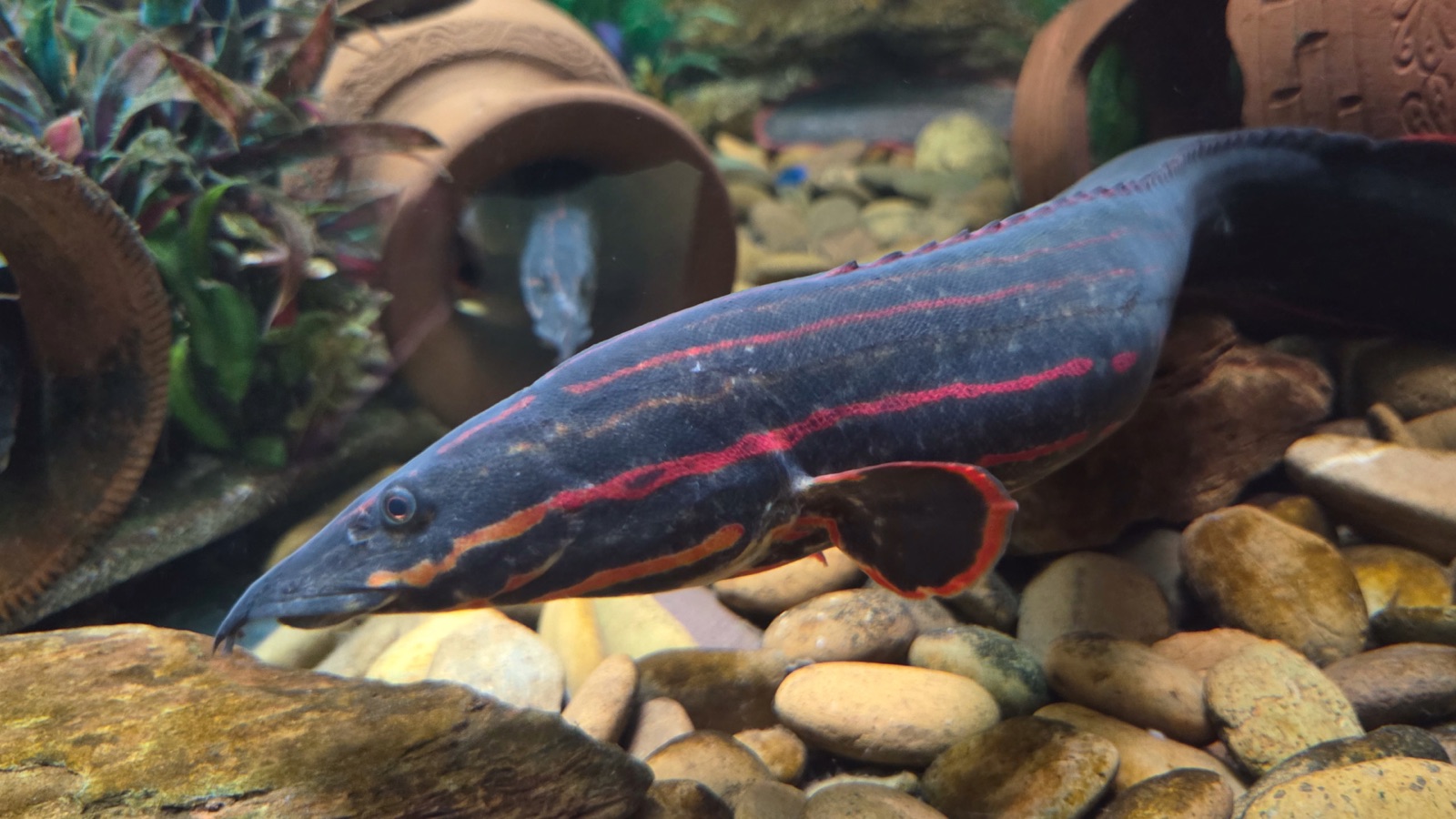
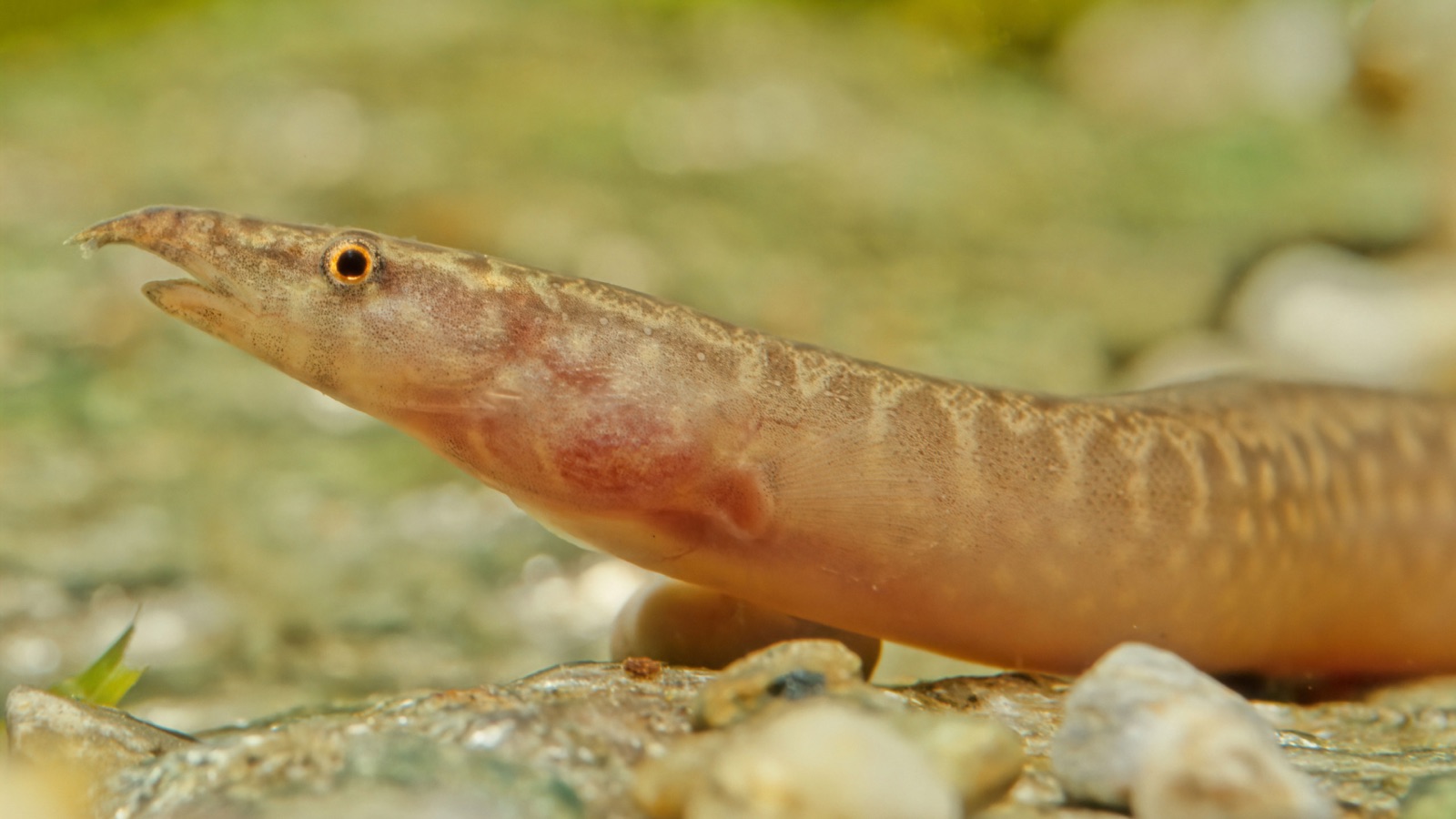
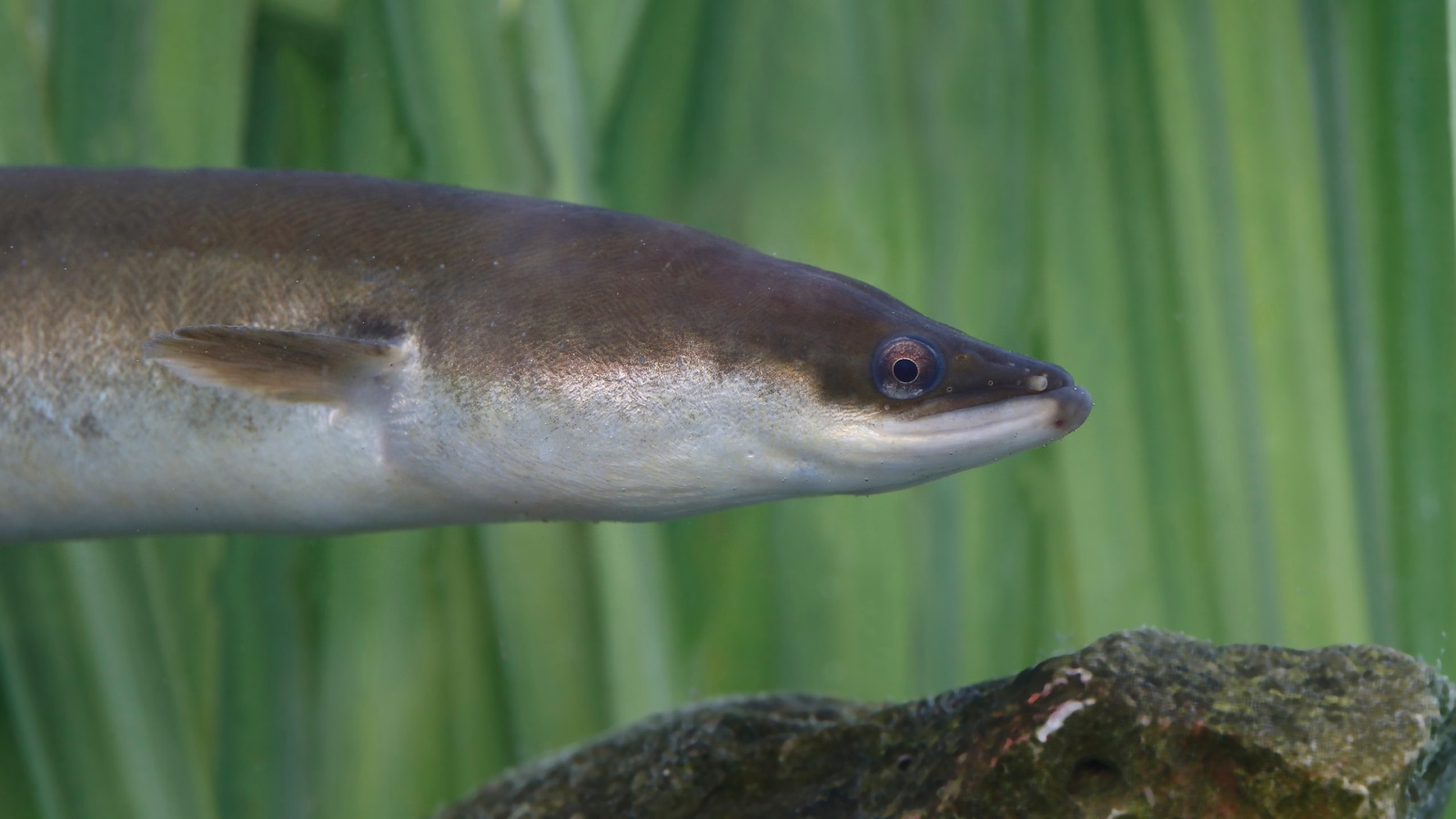
Photos © Adobe Stock
We keep the three families together because the hobby does — but we label each one honestly, grouped as spiny eels (Mastacembelidae), swamp eels (Synbranchidae) and the true Anguilla eels (Anguillidae). The look-alikes sold as “eels” — kuhli loaches, the electric eel and other knifefishes, morays and the amphibian “rubber eel” — are deliberately left out. Following the Catalog of Fishes and FishBase, the valid set is large and still being written up; new accounts are added as they are researched.
Species
Spiny eels · 91
Family Mastacembelidae (order Synbranchiformes) — NOT true eels, but the aquarium core: the fire eel (Mastacembelus erythrotaenia), the tire-track and peacock eels, and the spectacular rift radiation of Lake Tanganyika, plus African river species (Mastacembelus, Macrognathus, Sinobdella). Elongate, scaleless burrowers with a row of spines along the back, found from West Africa across to Indochina and Borneo. Substrate egg-scatterers; most are rarely bred in the aquarium.
- Gangaichthys indonepalicus
- Macrognathus aculeatus · Lesser spiny eel
- Macrognathus albus
- Macrognathus aral · One-stripe spiny eel
- Macrognathus aureus
- Macrognathus caudiocellatus
- Macrognathus circumcinctus · Belted spiny eel
- Macrognathus dorsiocellatus
- Macrognathus fasciatus
- Macrognathus guentheri · Malabar spiny eel
- Macrognathus keithi
- Macrognathus lineatomaculatus
- Macrognathus maculatus · Frecklefin eel
- Macrognathus meklongensis · Meklong Spiny Eel
- Macrognathus morehensis
- Macrognathus obscurus
- Macrognathus pancalus · Barred spiny eel
- Macrognathus pavo
- Macrognathus pentophthalmos · Sri Lanka spiny eel
- Macrognathus semiocellatus
- Macrognathus siamensis · Peacock eel
- Macrognathus tapirus · Tapir spiny eel
- Macrognathus zebrinus · Zebra spiny eel
- Mastacembelus alboguttatus · Starlight eel
- Mastacembelus albomaculatus
- Mastacembelus ansorgii
- Mastacembelus apectoralis
- Mastacembelus armatus · Zig-zag eel
- Mastacembelus aviceps
- Mastacembelus batesii
- Mastacembelus binhluensis
- Mastacembelus brachyrhinus
- Mastacembelus brichardi
- Mastacembelus catchpolei
- Mastacembelus congicus · Congo spiny eel
- Mastacembelus crassus
- Mastacembelus cryptacanthus · West African spiny eel
- Mastacembelus cunningtoni
- Mastacembelus dayi · Leopard Eel
- Mastacembelus decorsei
- Mastacembelus dictyon
- Mastacembelus dienbienensis
- Mastacembelus ellipsifer
- Mastacembelus erythrotaenia · Fire eel
- Mastacembelus favus · Tire-track eel
- Mastacembelus flavidus
- Mastacembelus flavomarginatus
- Mastacembelus frenatus · Longtail spiny eel
- Mastacembelus goro
- Mastacembelus greshoffi · Greshoff's spiny eel
- Mastacembelus kakrimensis
- Mastacembelus latens
- Mastacembelus liberiensis · Orange Spot Eel
- Mastacembelus loennbergii
- Mastacembelus malabaricus · Malabar spiny eel
- Mastacembelus marchei
- Mastacembelus mastacembelus · Mesopotamian spiny eel
- Mastacembelus micropectus
- Mastacembelus moorii · Moori spiny eel
- Mastacembelus niger · Mukongo
- Mastacembelus nigromarginatus
- Mastacembelus notophthalmus · Black Pearl Spiny Eel
- Mastacembelus oatesii
- Mastacembelus ophidium
- Mastacembelus pantherinus
- Mastacembelus paucispinis
- Mastacembelus plagiostomus
- Mastacembelus platysoma
- Mastacembelus polli
- Mastacembelus praensis
- Mastacembelus reygeli
- Mastacembelus robertsi
- Mastacembelus sanagali
- Mastacembelus seiteri
- Mastacembelus sexdecimspinus
- Mastacembelus shiloangoensis
- Mastacembelus shiranus · Malawi spiny eel
- Mastacembelus simbi
- Mastacembelus strigiventus
- Mastacembelus taiaensis
- Mastacembelus tanganicae
- Mastacembelus thacbaensis
- Mastacembelus tinwini
- Mastacembelus traversi
- Mastacembelus triolobus
- Mastacembelus trispinosus
- Mastacembelus ubangipaucispinis
- Mastacembelus unicolor · Unicolor eel
- Mastacembelus vanderwaali · Ocellated spiny eel
- Mastacembelus zebratus
- Sinobdella sinensis · Chinese spiny eel
Swamp eels · 25
Family Synbranchidae (Synbranchiformes) — also not true eels: the air-breathing swamp eels (Monopterus, Synbranchus, Ophisternon and kin) of the paddies, swamps, ditches and caves of the tropical Old and New World. Eel-shaped, near-finless and almost scaleless, they gulp air, survive drought buried in mud, and many are protogynous hermaphrodites — born female, later turning male. The Asian swamp eel is a notorious invader of the Florida Everglades.
- Macrotrema caligans
- Monopterus albus · Asian swamp eel
- Monopterus bicolor
- Monopterus desilvai · Desilva's blind eel
- Monopterus digressus
- Monopterus ichthyophoides
- Monopterus indicus · Bombay swamp eel
- Monopterus javanensis · Javan swamp eel
- Monopterus rongsaw
- Monopterus roseni
- Ophichthys cuchia · Gangetic mudeel
- Ophichthys fossorius · Malabar swamp eel
- Ophichthys hodgarti
- Ophisternon aenigmaticum · Obscure swamp eel
- Ophisternon afrum · Guinea swamp eel
- Ophisternon bengalense · Bengal mudeel
- Ophisternon candidum · Blind cave eel
- Ophisternon gutturale · Australian swamp eel
- Ophisternon infernale · Blind cave swamp eel
- Rakthamichthys anchi
- Rakthamichthys indicus · Eapen's swamp eel
- Synbranchus lampreia
- Synbranchus madeirae
- Synbranchus marmoratus · Marbled swamp eel
- Typhlosynbranchus boueti · Liberian swamp eel
True eels · 17
Family Anguillidae, genus Anguilla (order Anguilliformes) — the ONLY true eels here. Catadromous: they grow for years or decades in fresh water, then migrate thousands of kilometres out to sea to spawn once and die, so they CANNOT be bred in aquaria. The European eel is Critically Endangered and the American and Japanese eels are threatened — a real conservation story of overfishing, dams and glass-eel poaching.
- Anguilla anguilla · European eel
- Anguilla australis · Short-finned eel
- Anguilla bengalensis · Indian mottled eel
- Anguilla bicolor · Indonesian shortfin eel
- Anguilla borneensis · Borneo eel
- Anguilla celebesensis · Celebes longfin eel
- Anguilla dieffenbachii · New Zealand longfin eel
- Anguilla interioris · Highlands longfinned eel
- Anguilla japonica · Japanese eel
- Anguilla labiata · African mottled eel
- Anguilla luzonensis · Luzon mottled eel
- Anguilla marmorata · Giant mottled eel
- Anguilla megastoma · Polynesian longfinned eel
- Anguilla mossambica · African longfin eel
- Anguilla obscura · Pacific shortfinned eel
- Anguilla reinhardtii · Speckled longfin eel
- Anguilla rostrata · American eel
What’s new
All updates →- Name change6 Eels names updated to current Catalog of Fishes validity2026-09-04
- UpdatedTyphlosynbranchus boueti2026-09-04
- UpdatedGangaichthys indonepalicus2026-09-03
- UpdatedRakthamichthys anchi2026-09-03
- New speciesGangaichthys indonepalicus2026-08-13